

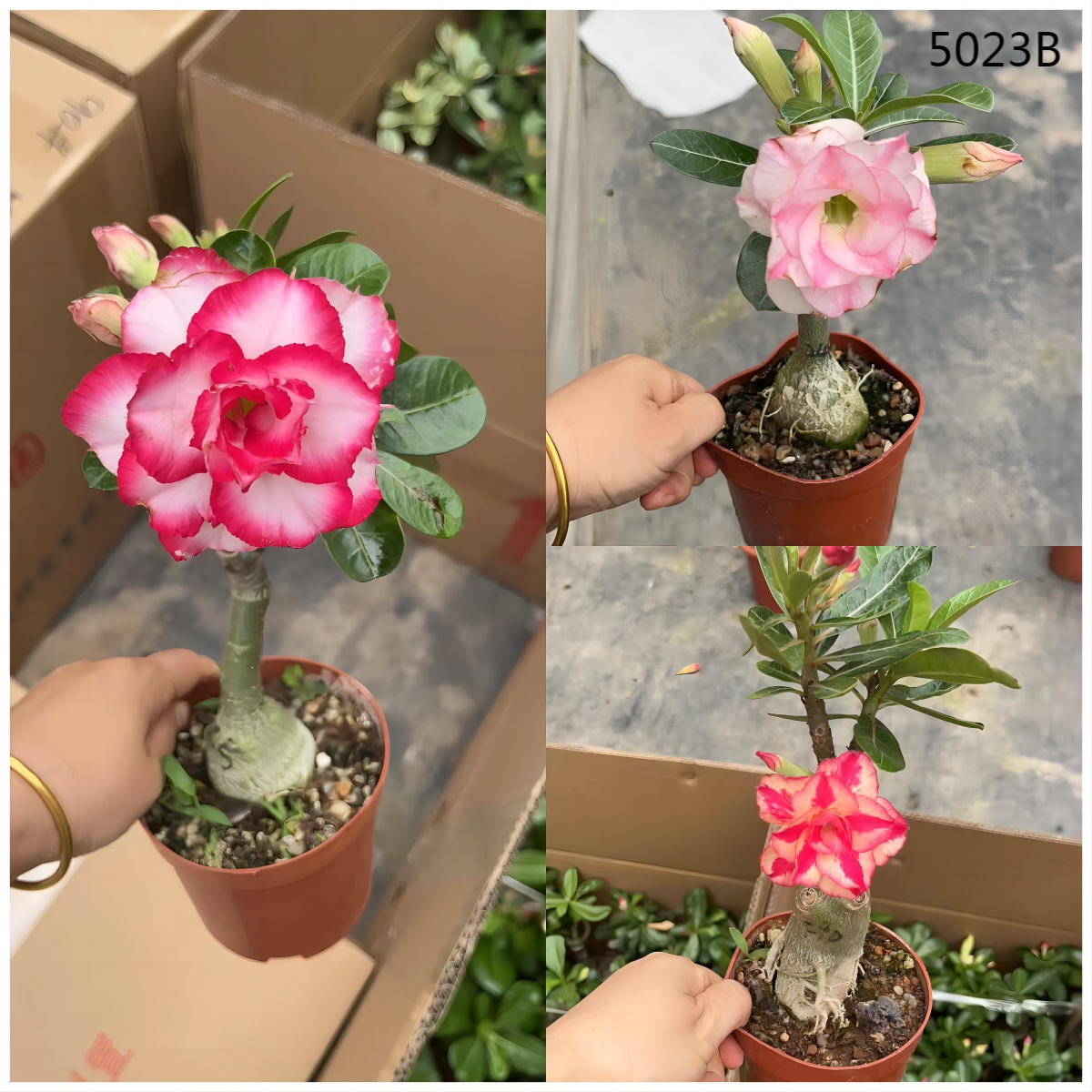
Desert Rose, scientifically named Adenium obesum, also known as Mock Azalea, is a succulent shrub of the Apocynaceae family. Native to the arid deserts of southeastern Africa and the Arabian Peninsula, it is not a true rose. Boasting an antique appearance and bright blossoms, it has become a highly popular ornamental potted plant.
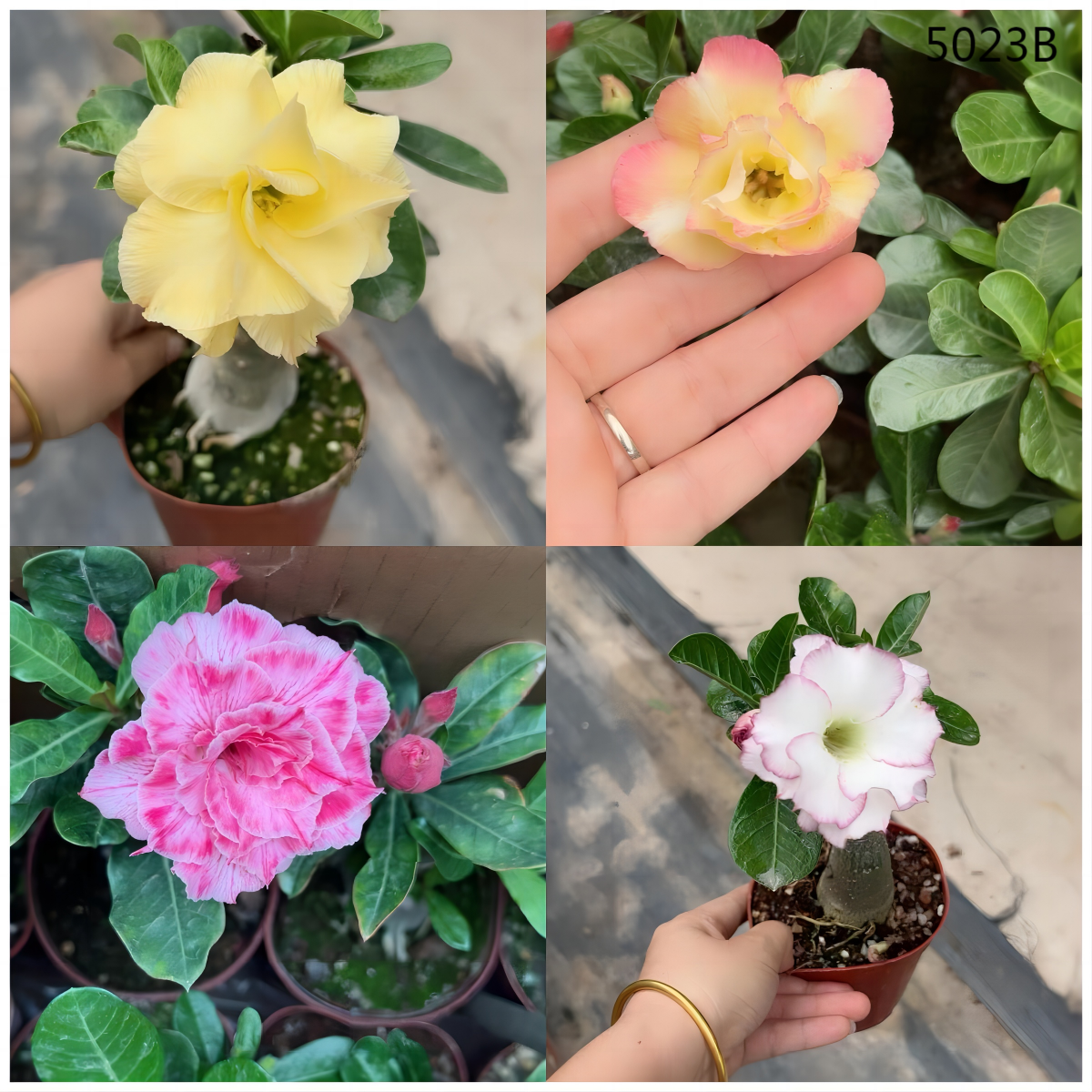
Its most distinctive feature is the swollen, fleshy trunk, which acts as a water storage reservoir to hold moisture and adapt to harsh desert conditions. The sturdy, gnarled trunk bears spreading branches, with thick, dark green leaves clustered at the branch tips. It has a long blooming period, generally from May to December. Its funnel shaped flowers are vivid and full, available in red, pink, white and variegated shades, with both single petal and double petal varieties. When in full bloom, it is covered with gorgeous flowers, offering great ornamental value.
It thrives in high temperatures and strong sunlight, and prefers loose, well drained sandy soil. Drought tolerant yet highly susceptible to waterlogging, root rot will easily occur if the potting soil stays wet. It cannot stand cold weather and requires proper winter protection. The golden rule for care is “better dry than wet”, and ample sunlight is essential for flowering. Note that the whole plant is toxic, especially its milky sap. Avoid ingestion and wash hands after pruning.
Symbolizing resilience and vigorous blooming amid adversity, Desert Rose combines the rugged charm of bonsai with the grace of flowering plants. It is ideal for balconies and patios, serving as a distinctive green plant for viewing trunks, leaves and flowers.
Post time: Sep-03-2026