Product Description
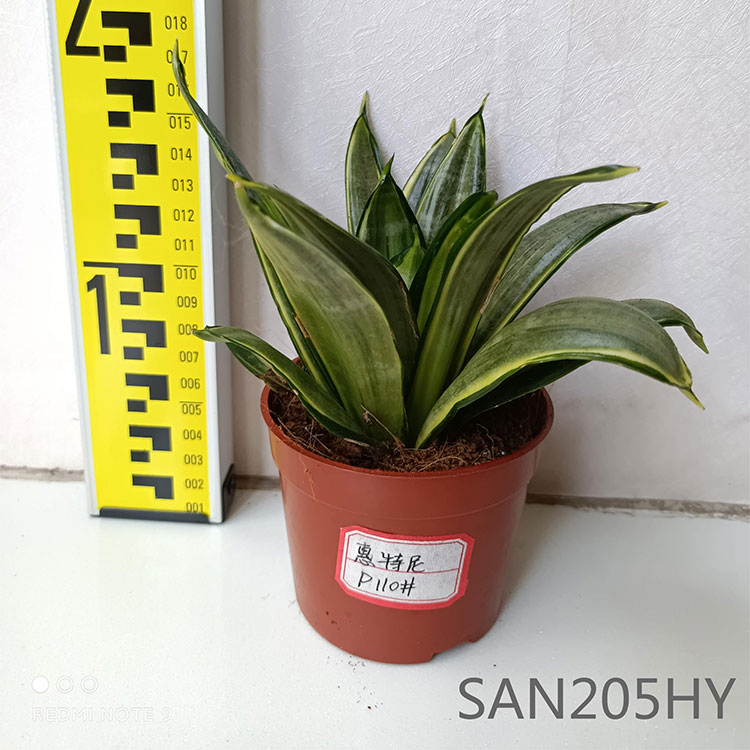
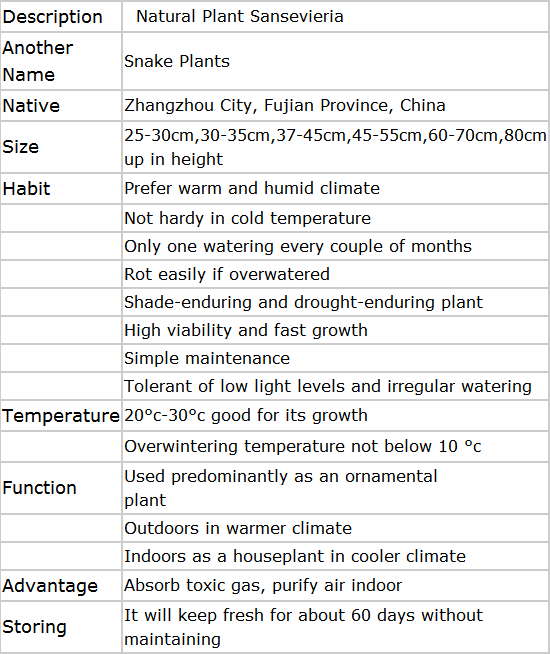
The Sansevieria Trifasciata Whitney, a succulent native to Africa and Madagascar, is actually an ideal houseplant for colder climates. It is a great plant for beginners and travelers because they are low maintenance, can stand low light, and are tolerant of drought. Colloquially, it is commonly known as the Snake Plant or Snake Plant Whitney.
This plant is good for the home, particularly bedrooms and other main living areas, as it acts as an air purifier. In fact, the plant was part of a clean air plant study that NASA led. The Snake Plant Whitney removes potential air toxins, like formaldehyde, which provides fresher air in the home.
The Snake Plant Whitney is rather small with about 4 to 6 rosettes. It grows to be small to medium in height and grows to about 6 to 8 inches in width. The leaves are thick and stiff with white spotted borders. Due to its smaller size, it is a great choice for your place when space is limited.
Nursery

Exhibition

Certifications

Team

Questions
As a low-light drought-tolerant succulent, caring for your sansevieria whitney is easier than most common houseplants.
Sansevieria whitney can easily tolerate low light, although it can also thrive with sunlight exposure. Indirect sunlight is best, but it can also tolerate direct sunlight for brief periods.
Be careful to not overwater this plant as it may lead to root rot. During the warmer months, be sure to water the soil every 7 to 10 days. In colder months, watering every 15 to 20 days should be enough.
This versatile plant can be grown in both pots and containers, both indoors or outdoors. While it doesn’t require a specific type of soil to thrive, ensure the mix you choose is well-draining. Overwatering with poor drainage can ultimately result in root rot.
As stated above, the snake plant whitney does not require much watering. In fact, they are sensitive to overwatering. Overwatering can cause fungus and root rot. It is best not to water until the soil is dried out.
It is also important to water the correct area. Never water the leaves. The leaves will remain wet for too long and invite pests, fungus, and rotting.
Over-fertilization is another issue with the plant, as it can kill the plant. If you decide to use fertilizer, always use a mild concentration.
The Snake Plant Whitney rarely needs pruning in general. However, if any leaves become damaged, you can easily prune them. Doing so will help keep your sansevieria whitney in optimal health.
Propagation of the Whitney from the mother plant by cutting is a few simple steps. First, carefully cut a leaf from the mother plant; be sure to use a clean tool to cut. The leaf should be at least 10 inches long. Instead of replanting immediately, wait a few days. Ideally, the plant should be callous before replanting. It may take 4 to 6 weeks for the cuttings to take root.
Propagation of the Whitney from offsets is a similar process. Preferably, wait several years before attempting to propagate from the main plant. Be careful to avoid damaging the roots when removing them from the pot. Regardless of the method of propagation, it is ideal to propagate during the spring and summer.
Terracotta pots are preferable to plastic as the terracotta can absorb humidity and provides good drainage. The Snake Plant Whitney doesn’t require fertilization but easily can tolerate fertilization twice throughout the summer. After potting, it will only take a few weeks and some mild watering for a plantlet to begin growing.
This plant is toxic to pets. Keep out of reach of pets that like to much on plants.
 By Aurora from Paraguay - 2018.03.03 13:09
By Johnny from Egypt - 2017.09.28 18:29
By Aurora from Paraguay - 2018.03.03 13:09
By Johnny from Egypt - 2017.09.28 18:29